



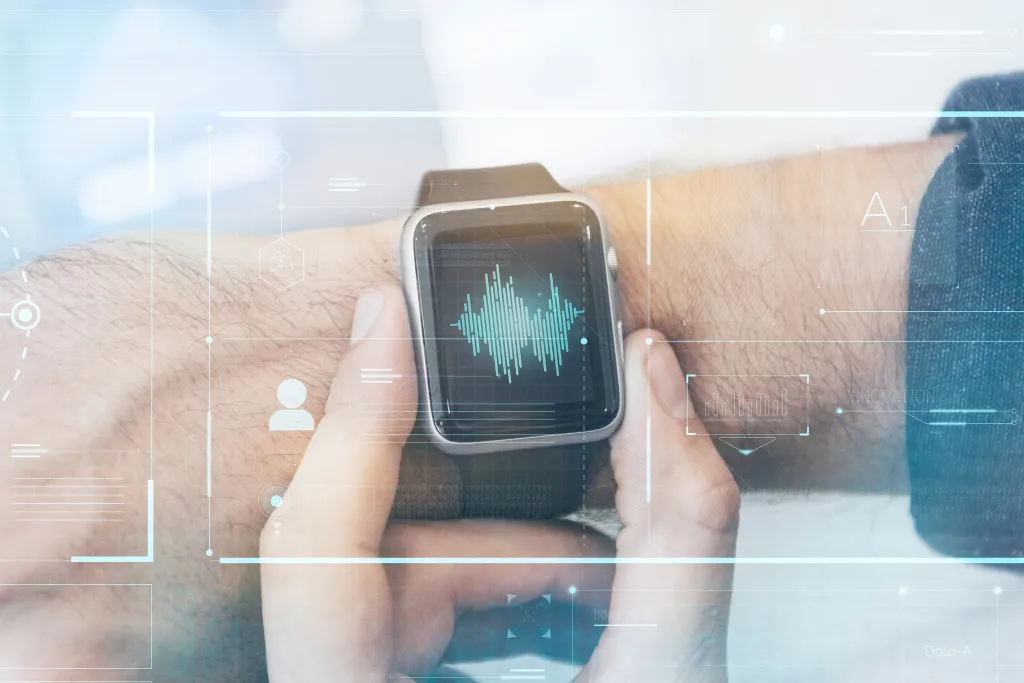
Scientists generally agree that walking for regular activity can help reduce the risk of health problems such as heart disease, obesity, diabetes, high blood pressure and even depression. Whilst the often touted ’10,000 steps per day’ figure is not a scientifically proven threshold, it has become a general guideline, one that many people are now able track, thanks to their smartphone.
And now, a new paper, Physical activity data from wearables from Klarity and Munich Life Re US has examined physical activity data from wearable technology and tied this data to mortality risk.
The study leveraged UK Biobank data that included over 58,631 lives (and 837 deaths).
Among the findings include: Individuals walking at least 7,000 steps per day experience significantly lower mortality risk, regardless of BMI, age, or smoking status; smokers with a daily step count of at least 7,000 have better mortality than non-smokers with fewer than 5,000 daily steps; obese participants with at least 7,000 daily steps have 40% lower mortality than “normal” BMI participants with a daily step count below 5,000; and pre-diabetics with at least 7,000 daily steps have a 60% lower mortality risk than individuals with normal A1C who walk fewer than 5,000 daily steps.
The findings could be significant for underwriters in the life insurance market.
“This research demonstrates the potential of using data from wearables to segment risk and potentially expand insurability,” said Dr. Gina Guzman, Chief Medical Officer at Munich Re Life US.
“Wearable data can be a window into the real-time health and lifestyle habits of applicants and may allow insurers to create more accurate and inclusive underwriting while simultaneously encouraging healthier behaviors among policyholders.”
Underwriters would first need to incorporate the data from wearable technology into their process, something which is already technically feasible, and an endeavour that is not as difficult as it might appear on the surface.
“Integrating wearable data into life insurance processes has never been easier. Policyholders can sync their wearable devices with a single implementation, and over the past seven to eight years, standardisation efforts have significantly improved. Insurers can start leveraging step count data from smartphones immediately as a first step, with broader wearable integration achievable in the near term,” said Will Cooper, Founder and CEO of Klarity.
Indeed, some insurers already have an existing program, like John Hancock’s Vitality, a rewards program that “rewards members for their everyday healthy activities, like walking the dog, going to the doctor and buying healthy food.”
And Vitality Insurance in the UK – owned by Discovery Holdings – also has a rewards program where customers can connect to their app and link up with a fitness tracker, so there is already activity in this space.
So, it would appear that the proof of concept and the technical wherewithal is already in place. Which just leaves the challenge of getting someone to actually engage with this new digital frontier.
In the life settlement market, one might be forgiven for thinking that this might be a tough ask. The cohort of insureds that participate in the space are healthier and wealthier than the average individual, and crucially, older, which many assume means that they are less likely to engage with the latest and greatest in technology developments. Not necessarily, according to Cooper.
“Even retirees – who may be less likely to use wearable technology – normally have smartphones, which already track step count passively,” he said.
“This provides an easy entry point for life insurers looking to enhance risk stratification for this demographic. Encouraging policyholders to sync their devices or participate in step-tracking initiatives can help insurers gather valuable mortality-related insights without requiring widespread adoption of additional wearables.”
It is not only life insurers who would be able to use this data and technology to better understand the mortality profile of the older cohort. Specialist life expectancy underwriters, who provide life expectancy reports to asset managers both during the original policy acquisition stage and afterwards (to keep the portfolio valuation up to date) could benefit here.
“These specialists can certainly leverage this data and insight provided that data privacy regulations are met and individual’s opt-in to share their wearable data. Our role is to help insurers and underwriters stratify risk more effectively while maintaining compliance with privacy laws,” said Cooper.
The pension risk transfer market is another area which could be impacted by the incorporation of wearable technology data into the underwriting process.
“Better mortality data can have a direct impact on pension risk transfer deals, which involve thousands of individuals,” said Cooper.
“More accurate risk stratification means insurers can price these deals with greater precision, reducing uncertainty.”
There are accuracy and manipulation risks, and not everyone carries their phone all the time, which could lead to gaps in data. Also, there are fairness and ethical Issues – would it be fair to penalise someone who doesn’t walk a lot due to a disability or job constraints? Would insurers reward active people with lower premiums and charge sedentary ones more?
Those are the questions that will need to be answered if this kind of data were to ever be adopted by the life insurance industry en masse. But, as with many new developments, it’s a case of one thing at a time.
“Carriers looking to incorporate third-party or wearables data will first want to conduct a pilot to assess participation rates and estimate baseline activity patterns,” said Guzman.
“We aim to provide tailored support and guidance to carriers considering using these new data sources in their underwriting programs.”