



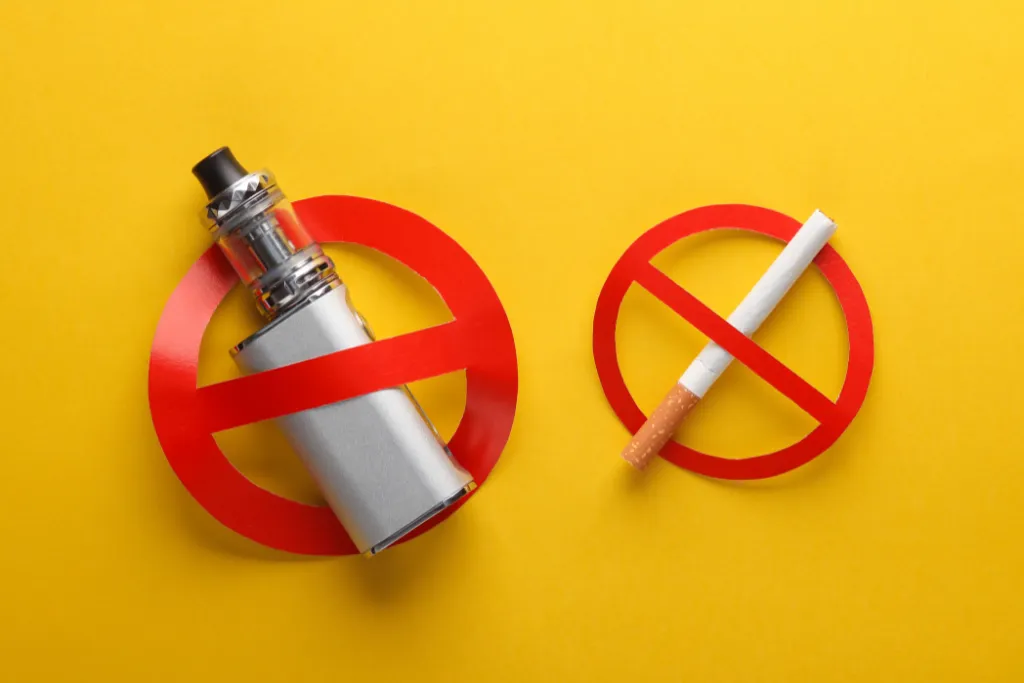
Smoking rates in the UK have been falling since records were first taken in 1974, having previously reached levels of over 80% of men in the late 1940s, according to anti-smoking lobby group, Ash, which now estimates around 13% of the country’s population uses nicotine.
The UK’s new Labour government is aiming to drive these numbers down even further and on 5th November it introduced the Tobacco and Vapes Bill which, if put onto the statute book, will mean that children aged 15 in 2024 will never legally be able to purchase tobacco products.
The UK isn’t the first country to attempt to raise a ‘smoke free’ generation. New Zealand’s parliament passed pioneering legislation in 2022 which would have stopped anyone born after 2009 from buying cigarettes. However, this was repealed after the election of a coalition government in 2023.
The chances of the UK successfully – partially – banning smoking appears much higher. The Labour government won the biggest majority in the country’s modern history with its July election victory and the smoking ban itself was first proposed by the previous Conservative government.
The UK’s smoking death numbers are currently trending downwards with the country’s state health service reporting 74,600 deaths attributable to smoking in 2019, a 3% fall compared with 2018 and a 9% decline relative to 2009.
However, Nicky Draper, Longevity Consultant at Crystallise, says that given the long timelines involved with nicotine-linked diseases, it will be some time before the proposed legislation has a material impact on smoking deaths.
“The incremental smoking ban, which increases the age it’s possible to buy tobacco by a year every 12 months, is public health policy at its best because the people who enact these measures are unlikely to witness the full extent of the changes it brings,” she said.
“This is chiefly because of the long time-lag between smoking behaviour and ill-health effects. Even for lung cancer, it’s probably 20 years before symptoms come along, and it’s the same for cardiovascular diseases.”
The current timelines for the partial smoking ban envisage current 15-year-olds being barred from buying nicotine in 2027. This means that even with the UK’s current state retirement age of 66, it will be 2079 before the first cohort to be affected by the ban reaches pensioner status.
“Because of the Tobacco and Vapes Bill’s incremental nature, what we will see is a modest impact on mortality in 20 to 30 years from now. But that effect will start to grow, and the aim is to ultimately produce a smoke free generation over the long term,” Draper said.
The gradual approach towards phasing out nicotine contrasts markedly with the prohibition approach which has typically been applied to reducing drug consumption, so why not go straight ahead with an outright ban?
Draper says the problem lies with the sheer addictiveness of nicotine; the US Surgeon General warned in 1988 that nicotine was as addictive as the universally proscribed drugs cocaine and heroin.
Because of the strong withdrawal effects from nicotine, numerous studies have shown that smoking cessation attempts, which are supported by nicotine replacement therapy, have much better success rates than simply stopping cold.
“Quitting smoking is difficult, but by and large, evidence tells us that those who have the support of a structured smoking cessation program, such the one which is offered through the NHS, are the most successful,” Draper says.
Draper adds that it is simply not possible to provide sufficient support to the UK’s estimated six million smokers if nicotine was simply banned at a stroke.
The problems with providing support to all UK smokers in a wholesale nicotine ban scenario is exacerbated by the wide disparity in smoking rates between different socioeconomic groups. While the UK’s headline smoking rate of just under 13% is much lower than similar sized neighbouring countries Germany (21.5%), and France (34.6%), this masks a broad differential between social groups.
The UK’s Office of National Statistics’ Index of Multiple Deprivation classifies populations into ten subgroups. According to the 2021 UK Census data, roughly one-third (33.1%) of English smokers lived in the two most deprived deciles. In contrast, the least deprived neighbourhoods recorded smoking rates of just 6.8%.
“So how do you support everybody if you suddenly ban smoking? And is there a potential for a ban of this type to turn into an underground situation where people are then accessing black market cigarettes because the support to quit isn’t there?” said Draper.
The UK government also announced that disposable vapes will be banned from 1st June 2025 under separate environmental legislation. The ban follows concerns over a marked increase in vaping among young adults who had not previously smoked.
The move to ban disposable vapes means that more than half of countries now have some form of e-cigarette restrictions in place – 33 have banned vapes sale outright, while another 87 have some form of restriction in place.
While the move to outlaw disposable vapes has its genesis in environmental concerns, there is evidence to suggest that vaping is a gateway to nicotine addiction, that bypasses cigarette use, so a crackdown could have an impact here as well. But this two-pronged approach to reducing smoking is, according to Draper, a long game here, and while there is unlikely to be an impact on mortality data in the short to medium-term, there could be additional benefits down the line.
“As I say, there will be only a modest impact on mortality in the UK, and it won’t be for another 20 to 30 years until we see that impact,” said Draper.
“But there will still be an impact, and it’s also important to remember the potential knock-on effects. Smoking costs the NHS billions of pounds a year, and significantly reducing the amount of resources that go into managing smoking-related illnesses can then be deployed elsewhere.”