


Obesity is a killer, but nobody dies directly from being overweight. Instead, excess pounds are linked to a higher risk of getting type II diabetes, developing fatty liver, and having a stroke, while research links obesity to up to 8% of all cancer cases.
Obesity is a factor in all of the four main non-Covid causes of deaths in the UK in 2022, while diabetes itself is a risk factor for heart disease, the leading cause of mortality worldwide.
The number of overweight people is so high globally that the World Health Organisation has dubbed it an, ‘obesity epidemic’.
“There’s over a billion obese people globally and we know without any debate that being overweight increases your risk of chronic diseases such as diabetes, heart disease, cancer, and musculoskeletal disease,” says Nicola Oliver, Director of Life and Health at longevity specialists Medical Intelligence.
Being overweight may be a proxy for a number of leading causes of mortality but Rahul Nawander, Ontario-based Medical Director at life, health, and life settlement firm Fasano Associates, says that thinking over the dangers posed by obesity has changed over the last ten to 15 years.
Evidence has emerged that certain cohorts may in fact benefit from a certain amount of extra weight.
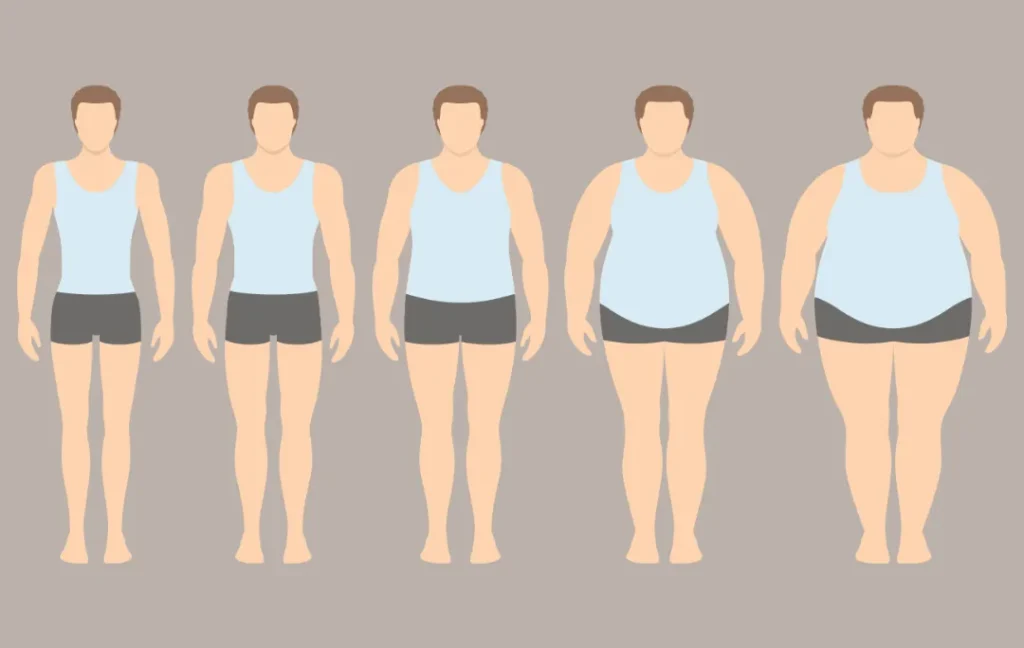
The Body Mass Index (BMI) has been the main indicator of the extent of someone’s obesity (or not). It is calculated by dividing a person’s body mass by the square of their height; a BMI over 25 means a person is considered overweight, more than 30 and they are considered obese.
Oliver says there is a fundamental problem with the use of BMI and that its relatively blunt approach can classify otherwise healthy people as obese.
“BMI may not be the best measure of obesity. Take the example of a professional rugby player or a bodybuilder, these people are by definition very fit but because of their muscle bulk they would be classified as overweight or possibly even obese. However, BMI remains a good proxy for measuring bodyweight” she says.
But Nawander says questions are also being raised over whether a high BMI is always negative for health. He says that, while traditionally, obesity has been considered as being bad and that people should look to lose weight if they were classified as obese, research has emerged which challenges this thinking – for some cohorts, at least.
“Several studies have found obesity is an independent predictor of mortality. Interestingly this research also found that when you look at people older than 65 there is a term known as the ‘obesity paradox’.
“What this means is that people in this age group who are obese tend to have a slightly better life expectancy compared to people who have a BMI of around 25 or even less. The hypothesis is that frailty becomes an issue after the age of 65 and a certain amount of extra weight can be helpful,” says Nawander.
The additional weight can be positive in the case of hospitalisation as overweight patients have fat reserves to help deal with the well-documented issue of poor food in medical facilities.
Nawander says that the obesity paradox is only apparent among older people who are mildly overweight and that in severely obese people, other mortality risk factors supersede its impact.
“Not that every overweight person benefits from the obesity paradox. Once a person’s BMI goes over 36 or 37 then the other ill-effects from being obese will determine the mortality outcome. There’s a small window where being overweight is good,” says Nawander.
According to Nawander, knowledge of the obesity paradox is filtering through to pricing life settlements contracts. Whereas the traditional approach would be to apply a certain amount of debits to a policy holder whose BMI was higher than the average for their cohort, now, firms are acting differently.
“If a person’s BMI was between 30 to 35, previously we would assume they had a lower life expectancy. But now we look at this differently and say that additional fat could be helpful from a life expectancy perspective,” he says.
Nawander is bullish that obesity’s risk to health can be tamed by the latest generation of medication, of which some has garnered much attention on social media from Tik Tok and Instagram influencers for their apparent weight-loss capabilities.
While these intravenous medications are designed for treating diabetes, their role in controlling the production of glucagon – a hormone produced by the pancreas to help regulate blood glucose levels – has produced positive results in relation to weight loss.
Nawander said that life settlement providers are now encountering applicants which don’t have diabetes but are using glucagon control medication to regulate their body weight.
“A future trend could emerge over the next 10 to 12 years where you start to see people who in general are close to their optimal weight. Perhaps the current obesity epidemic will be contained to an extent,” he says.
Oliver says that the impact of the current generation of weight loss medication is limited because in theory they are only available to diabetes patients and a very specific subset of the overweight population.
But she points to the large rewards available to the pharmaceutical firm which manufactures the first mass-market obesity medication and says that currently there are 600 obesity treatments which are in phase three trials.
“There’s not a shortage of appetite amongst pharmaceutical companies to develop a successful medication. Phase three trials are at the advanced assessment stage and firms are usually pretty confident at this point, given the requirements of the first two phases which are rigorous and involve spending a substantial amount of money, that they will achieve success,” she says.
“There is a big pipeline of potentially important treatments coming onto the market, some are medications, others focus on lifestyle and possibly some surgical treatment,” Oliver adds.
Nawander is positive that an effective and low-cost obesity treatment would have multiple positive health implications for life expectancy.
“Mortality improvements won’t come from across the board as diseases will be affected differently by a reduction in obesity. I’m also not saying that someone who we are quoting to live 90 years today will live to 100 in five years’ time. But maybe it could shift from 90 to 93 over a relatively short period. It will be a step-by-step process,” he says.