



The prevailing interest rate environment significantly impacts private asset classes in terms of both fundraising and deal activity levels. Higher rates tend to impact fundraising negatively, because they tend to provide institutional investors with what they see as a better yield versus liquidity payoff via investing in liquid fixed income products.
And in terms of deal activity, it is generally the same story. Higher rates mean less issuance in the private debt market, for example, as businesses are less willing to take on debt at a higher cost of capital and less willing to refinance existing debt. In private equity, leveraged loans are more expensive, impacting the price buyout shops are able to pay for investments, reducing the number of transactions.
So, it must be a similar situation in the life settlement market then?
In fundraising, yes.
“The fundraising environment in the past few years has definitely been slower than before rates began to rise,” said Jonas Martenson, Founder and Sales Director at Ress Capital. “I’m not surprised, and from the conversations I’ve had with other market participants and at conferences, it’s something that’s impacted many, if not all asset managers in the space.”
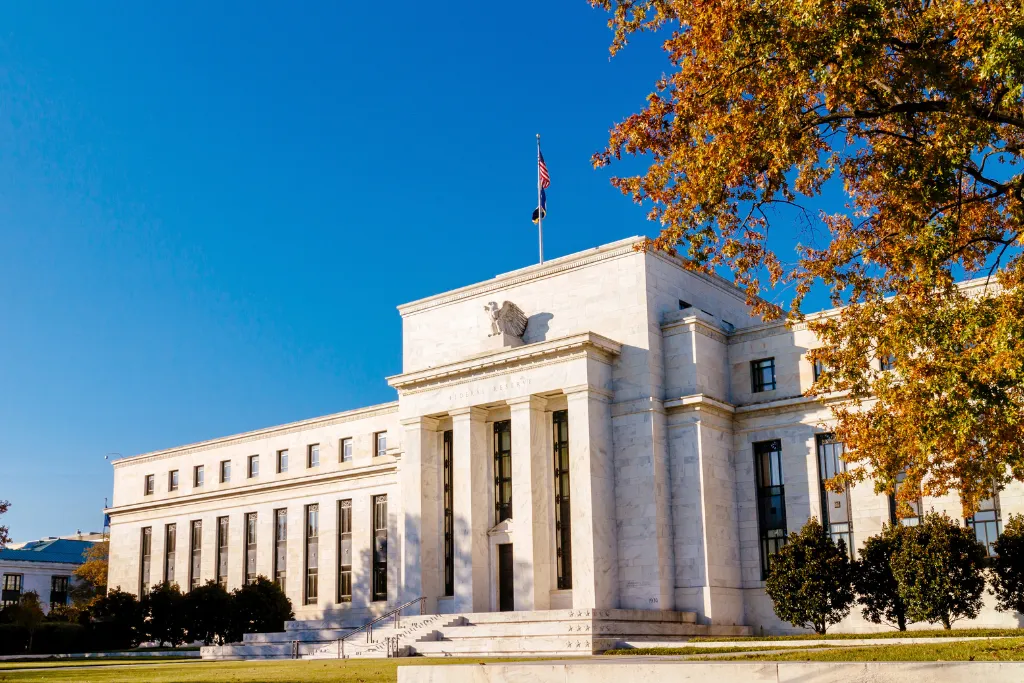
So, when the US Federal Reserve lowered the target range for the Federal Funds Rate to 4.75% – 5% – a 50-basis point cut – in mid-September, life settlement types, just like all sub-categories of the private markets, would likely have felt encouraged.
“Certainly, it should help with fundraising. While there won’t be a sudden deluge of money coming into the market, there will be some investors that will either accelerate their plans to allocate to private asset classes that can provide an acceptable spread over risk-free, or re-look at their previous plans to continue to allocate to high yielding liquid investments like life settlements,” said Martenson.
In the deals market, however, the answer is not nearly that cut and dried.
In the tertiary market, it could be argued that rates will have had some impact. Any asset managers using a mark to model valuation method – which will likely have lower interest rates baked into it for policies purchased before rates began rising – will have higher valuations than a mark-to-market method, so they might be loathe to sell in the tertiary market at the moment, as they would likely realise a loss on the NAV of any policies sold in this situation.
But the reality is still that the price an asset manager is willing to pay for a life insurance policy is still heavily influenced by the life expectancy of the insured.
“You still have to consider longevity risk, which is the main investment risk in our market. When you’re buying in the tertiary market, the insured’s medical records might have changed, which would impact the anticipated policy maturity date. Now, they may change for the worse, but for those insured whose medical situation changes for the better, that would have a big impact on pricing,” said Phil Hall, Director of Policy Trading at Longevity Holdings.
And, similar to the secondary market in private equity or venture capital, for example, there are always other reasons for activity.
“You get funds that are at the end of life that would be willing to take a haircut on the remaining policies that have not matured yet, and open-ended funds might need to sell policies if they have investor redemptions. While the latter might be influenced by interest rates, the former largely isn’t,” Hall added.
In the secondary market, interest rates carry so little influence, they barely come up.
That is because the drivers of activity in the space are consumer-based, and are as much personal as they are economic; the need to pay for healthcare costs, or a divorce, or simply because the seller does not think they need the coverage anymore – perhaps their mortgage is paid off, or their children are now adults who are providing for themselves (or both). Often, these drivers of supply are uncorrelated to financial markets.
And the data bears that out. The Life Settlement Report, part of The Deal, publishes annual league tables that analyses secondary market activity in late spring/early summer each year; the data is for the prior calendar year.
This year, the data showed growth in the number of transactions for the third consecutive year; 3,181 transactions took place in 2023, compared to 3,051 in 2022 and 2,933 in 2021. The correlation between activity and interest rates has indeed been positive, not negative, and according to Rob Haynie, Managing Director at Life Insurance Settlements, that is a feature of the market that is permanent.
“Activity in the secondary market for life settlements has very little to do with the financial markets,” he said.
“You may have a situation where a sudden rise in interest rates has made a mortgage unaffordable, and so an insured decides to sell their life insurance policy to pay off or significantly pay down the mortgage. But these situations are rare. The main reasons for selling a life insurance policy – more than 95% of the time – are to fund healthcare costs, because the premiums themselves are too high, or because an insured just doesn’t need or want the policy anymore.”
Observers have suggested that another rate cut could be on the cards in November or December (or both). Should that happen, then those in the private markets who are out raising money will likely raise a glass or two to the US Federal Reserve Open Market Committee.
But when they are talking to potential investors, interest rates are rarely mentioned.
“What we try and reinforce in conversations with investors is the low correlation between the return profile of a life settlement portfolio and the broader capital markets. Yes, interest rates impact investor demand. But they barely impact the portfolio performance,” said Martenson.
“Life settlements provide a solid return above the risk-free rate, with low correlation to equities and bonds and lower volatility. Interest rates simply do not affect life settlement performance or activity like they do in other asset classes.”